Physical Address
2958, Second Floor,
Arya Pura, Roshan Ara Road,
Delhi – 110007, India
Email Address
ceo@dimrajtraders.com
dimrajtraders24@gmail.com
Phone Numbers
+91 98998 59299
+91 95609 80298
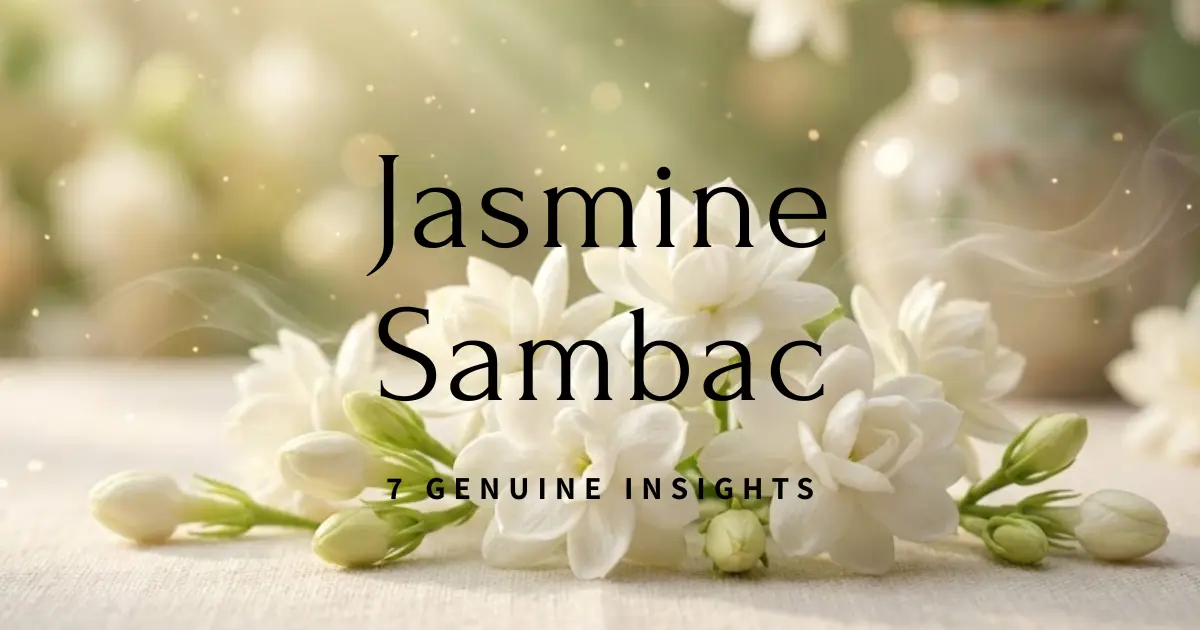
Jasmine Sambac has followed human footsteps from shaded village courtyards to modern perfume shops, carrying a scent memory that is at once intimate and unmistakable.
In gardens, in garlands, and in concentrated perfume oils, the flowers of Jasminum sambac have been cultivated and cherished across South and Southeast Asia for centuries.
This article presents seven grounded insights into why people prefer this scent, botanical background, how it behaves in blends, practical care for growers, the realities of extraction and attars, how perfumers use it, and how to choose and use jasmine-based fragrance products.
Every factual statement below is supported by botanical, horticultural, or perfumery sources, as well as my own experience working closely with this scent through my store and the products I offer. Now, I hope you feel comfortable.
let’s get started.
Jasmine Sambac arrived in human stories as a night-blooming white flower whose perfume announced evening rituals, weddings, and quiet household moments.
Botanically known as Jasminum sambac, this species is distinct from other jasmines by the intensity of its flowers and their traditional roles in garlands and offerings in many cultures.
Its scent is often described as rich, floral, slightly honeyed, and sometimes mildly indolic, a quality that creates a warm, long-lasting floral heart in perfumes and attars.
These attributes explain both its cultural presence and the practical reasons perfumers and artisans favor extracts from its blooms. The plant’s accepted scientific profile and native range are recorded in authoritative botanical databases.
A single jasmine Sambac blossom can feel familiar in a way few floral scents do. Olfactory neuroscience shows that scent links closely to memory and emotion, and culturally charged fragrances become mnemonic anchors when repeatedly associated with people, places, or rituals.
Jasminum Sambac’s scent character – at once sweet, floral, and subtly animalic – often evokes domestic memories, religious rites, and personal ceremonies in regions where the plant is commonplace.
This kind of learned preference is a large part of why people return to the scent over time: it is not just the aroma itself but the associations it carries. Scientific reviews of odor-emotion links and cultural uses of scent underline this connection between fragrance and memory.
Many people describe jasmine Sambac as calming in low concentration and more evocative or sensual when worn more heavily.
In perfumery and attar use, concentration and context define how the scent is read: a light dilution in a body oil can feel familiar and soothing, whereas a concentrated attar or absolute can feel intense and intimate.
This versatility contributes to its enduring popularity across both everyday and ceremonial uses. Practical product copy that aims to invite trial should emphasize the range of experiences — from gentle familiarity to evening richness — that Jasminum Sambac can provide.
Research into olfactory memory finds that scent is a powerful trigger for autobiographical recall and mood modulation; authors of olfactory and psychological reviews note how specific scents become emotionally salient through repeated context-based exposure.
For communities where jasmine Sambac is used in garlands, religious offerings, or daily grooming, the fragrance becomes woven into life’s predictable rhythms.
That cultural familiarity makes Jasminum Sambac a scent many people actively prefer because it signals comfort, belonging, or ritual continuity.
For product content, referencing this emotional dimension (with sourcing) builds trust and relevance for readers who expect botanical and cultural accuracy.
In formal fragrance structure, jasmine Sambac most often occupies the heart note position because its aromatic compounds reveal themselves after top notes evaporate.
However, in concentrated forms such as absolutes and attars, Jasminum Sambac can reach into the base, affecting the dry down and persistence of a perfume.
Its olfactory profile is complex: floral and sweet, with honeyed, green, and slightly indolic facets that can read as warm or gently animalic.
These facets help it pair well with woods, resins, vanilla, tonka, and musks when perfumers seek depth and longevity. Technical descriptions of jasmine absolutes and ingredient datasheets consistently describe these heart-to-base behaviors.
Perfumers create accords by balancing volatile top notes, mid-weight heart ingredients, and fixative bases. Jasmine Sambac’s mid-weight to heavy aromatic molecules mean it can provide a sturdy floral heart that bridges bright citrus tops and resinous or woody bases.
For daytime fragrances, perfumers often temper Jasminum Sambac with lighter florals and citrus to keep it airy; for evening or traditional attars, they may let jasmine Sambac dominate and anchor it with sandalwood or amber for depth and longevity.
Industry references and ingredient profiles validate these compositional roles.
Botanical records place the native range of Jasminum sambac in parts of South Asia, including the eastern Himalaya and India, with a long history of cultivation throughout South and Southeast Asia.
Over centuries the plant has been selected and propagated in India, the Philippines, Indonesia, Thailand, and other tropical regions, where it became integral to cultural practices.
Authoritative plant databases and floras record both its native range and the fact that it has become naturalized or cultivated widely in tropical and subtropical zones.
The accepted botanical narrative is that jasmine Sambac originated in South Asia and the eastern Himalayan foothills and then spread through human cultivation.
Botanical repositories and taxonomic databases list Jasminum sambac as an accepted species with distribution notes tied to this range, reinforcing the plant’s deep association with regional horticulture and culture.
Gardeners and plant authorities note that multiple cultivated varieties exist, adapted to local climates and needs.
Jasmine Sambac thrives in warm climates without frost and does best in tropical to subtropical environments. It grows well in full sun to part shade, prefers well-draining soil enriched with organic matter, and flowers more reliably when it receives adequate light and moderate humidity.
In temperate regions, it is commonly grown in containers and moved indoors or into protected spaces during cold months to avoid frost damage. Horticultural guides and plant-finder records give specific USDA zone guidance and cultural tips for gardeners.
Jasmine Sambac rewards growers who give it steady, sensible care. Choose a potting mix that drains well but retains moisture, place the plant in bright indirect light or morning sun with afternoon shade in hot climates, and maintain even soil moisture without waterlogging.
Fertilize during the active growing season to encourage blooms; prune after heavy flowering to shape the plant and stimulate new growth.
Container culture is a common strategy in cooler climates — overwintering indoors preserves blooms and prevents frost damage. These horticultural best practices are documented by botanical gardens and horticulture authorities.
To establish Jasminum Sambac (propagation and early care), root semi-hardwood cuttings in warm months or plant established container specimens in spring. Use a well-draining, organic-rich potting mix and a container slightly larger than the root ball if growing in pots.
Provide support if the cultivar is trained to climb or if you prefer a trellised habit. Water regularly to keep the soil evenly moist during the growing season, reduce water in winter when growth slows, and feed with a balanced fertilizer monthly during spring and summer for best flowering performance.
These practical steps reflect standard nursery and botanical guidance.
These basic care principles are consistent across horticultural sources and are practical both for garden beds and container culture.
Jasmine flowers are fragile and contain many heat-sensitive aromatic compounds, which makes conventional steam distillation a poor method for preserving their characteristic aroma in many cases.
Instead, solvent extraction and traditional enfleurage or maceration techniques are widely used to produce concretes and absolutes that capture the full fragrance profile of jasmine Sambac.
In regions with attar traditions, flowers are also processed into oil-based perfumes where jasmine aroma is absorbed into carrier oils such as sandalwood; the resulting attar or ittar is a time-honored perfumery form.
Technical reviews and extraction studies explain why solvent extraction and enfleurage are preferred for delicate white flowers.
In perfumery, the term “jasmine Sambac” usually refers to the aromatic extract derived from the species Jasminum sambac — typically a concrete or absolute produced by solvent extraction, or an attar produced by oil infusion methods.
These materials are used as concentrated perfumery ingredients and are valued for reproducing the flower’s true scent in fragrance compositions. Ingredient catalogs and perfumery references describe the forms in which jasmine Sambac is sold to the trade.
Modern supercritical CO2 extraction and refined solvent extraction have also become common to obtain jasmine Sambac extracts with varying olfactory signatures.
Each method yields material with slightly different aromatic qualities and cost structures, and these differences are discussed in perfumery technical literature.
Perfumers value jasmine Sambac for its strong floral character and the way it brings honeyed, green, and slightly animalic nuances to the heart of a fragrance.
It offers complexity that enhances accords and supports both traditional oriental profiles and modern floral constructions.
Because Jasminum Sambac can be concentrated into stable absolutes and attars, it provides perfumers and artisans with an ingredient that contributes persistence and richness to compositions across price points.
Ingredient profiles and industry discussions confirm jasmine Sambac’s role in both artisanal attars and higher-end perfumery.
The most practical rule for composition is that jasmine Sambac tends to form part of the heart while enriching the dry down when used at strength.
When blended with citrus or green top notes it gives a lively, fresh lift to the opening; when combined with woods, resins, or musks it deepens the base and extends longevity.
Perfumers exploit this flexibility by adjusting dilution, fixation, and supporting notes to steer Jasminum Sambac’s expressive range. Technical perfumery resources describe these interactions and provide blending guidance.
When buying jasmine Sambac products, quality depends on clarity about botanical identity, extraction method, and origin.
A reliable product listing states the botanical name Jasminum sambac, specifies whether the material is an absolute, concrete, or attar, and discloses the extraction method and country of origin when possible.
For a concentrated 10 ml Jasmine Attar or Ittar perfume oil, the small size is useful for travel and sampling but expect it to be potent: attars are oil-based and concentrated.
Supplier datasheets and perfumery vendors routinely recommend storing such oils in cool, dark conditions to preserve aromatic integrity.
Look for: full botanical identification (Latin name), extraction method (e.g., solvent extraction, enfleurage, CO2), origin or region, supplier reputation, and clear handling instructions.
When possible, test a sample or ask for a small decant; authentic jasmine Sambac absolutes or attars should present a floral, fresh, and at times indolic profile rather than a thin sweet or obviously synthetic smell. Ingredient datasheets and trade houses provide consistent advice on these quality indicators.
Apply attars sparingly to pulse points; attars are oil-based and will usually last several hours to a full day depending on concentration and skin chemistry.
Store in tightly closed glass bottles away from light and heat to slow oxidation and preserve scent nuance.
For the product Jasmine Attar / Ittar Concentrated Perfume Oil – 10 ml | Beautiful Jasmine Sambac fragrance, recommend modest application and cool storage to customers to maximize the sensory experience and shelf life.
Vendor guides and perfumery handbooks provide the same practical storage and application advice.
| Topic | Quick facts |
| Botanical name | Jasminum sambac |
| Common names | Arabian jasmine sambac, sampaguita (Philippines). |
| Native range | Eastern Himalaya and parts of India; widely cultivated across South and Southeast Asia. |
| Flowering | Many cultivars open flowers in the evening; some bloom multiple flushes per year in warm climates. |
| Fragrance character | Rich, heady, floral, slightly indolic and honeyed. |
| Main commercial extracts | Concrete, absolute, attar/ittar (oil infusion), CO2 and solvent extracts. |
| Typical uses | Perfumery, attars, ceremonial garlands, aromatherapy, cosmetics. |
| Care summary | Bright indirect light to partial sun; even moisture, well-draining soil, prune after flowering. |
| Where to buy | Reputable nurseries, botanical garden plant sales, specialized perfumery suppliers. Verify botanical name and extraction method. |
Below are concise, sourced answers that use common search phrases exactly as written by many users. Each response references practical, verifiable sources.
Jasmine Sambac is a species of jasmine, botanically Jasminum sambac, known for small, intensely fragrant white flowers and widespread cultural use in South and Southeast Asia; it is used in perfumery and traditional garlands.
Sambac Jasmine (Jasminum sambac) originates from the Indian subcontinent, particularly India, Bhutan, and Southeast Asia (like Myanmar, Sri Lanka), but is now cultivated globally in warm regions, cherished for its intense fragrance in perfumery and cultural uses, like leis in Hawaii or scenting tea in China.
Jasmine Sambac smell: generally a rich, heady floral with honeyed, green, and mildly indolic facets; exact aroma varies with cultivar and extraction method.
“Jasmine” refers to the wider genus Jasminum with many species; jasmine Sambac is one species with a distinctive floral profile often described as heavier, more indolic, and culturally specific compared to other jasmines such as Jasminum grandiflorum.
Jasmine Sambac in perfume: usually the absolute or attar produced from Jasminum sambac flowers and used as a heart note ingredient to impart floral depth and sensual warmth.
Jasmine Sambac absolute: a concentrated aromatic extract produced by solvent extraction of jasmine Sambac flowers (concrete then absolute). Absolutes capture delicate fragrance compounds that steam distillation can lose.
Many cultivars produce evening-opening flowers and can bloom several times a year in warm climates; local climate and cultivar affect timing and frequency.
provide bright light or morning sun, well-draining soil, regular moisture without waterlogging, monthly feeding in growing season, and pruning after major flowering to maintain shape.
Yes, with bright light (south or east window or supplemental grow lighting), good airflow, and warm indoor temperatures; container culture and careful light management help bloom indoors. Horticultural care guides recommend container overwintering in cooler zones.
Where to buy jasmine sambac plant: check reputable nurseries that list the botanical name Jasminum sambac, botanical garden sales, or specialized online plant retailers; confirm shipping and local import rules. For oils and absolutes, look to specialized perfumery suppliers that disclose extraction method.
Yes, Arabian jasmine is a common English name for Jasminum sambac, and the terms are used interchangeably in horticulture and trade.
Jasmine Sambac leaves a lasting impression not because it tries to be extraordinary, but because its presence is woven into ordinary moments that people value: evening air settling over a garden, a garland offered during a ceremony, or the gentle release of fragrance when a bloom opens at dusk.
Its flowers illustrate how a plant can hold cultural memory, botanical resilience, and aromatic depth all at once.
What remains most striking about Jasminum Sambac is how consistently it connects place, tradition, and sensory experience.
Its fragrance is shaped by the regions where it is cultivated, strengthened by the warm climates it thrives in, and preserved through extraction methods developed over generations.
Whether growing on a balcony, shaping perfumery, or symbolizing national heritage, Jasmine Sambac continues to remind us that some scents endure because they feel familiar, honest, and timeless.
In understanding Jasmine Sambac—its origins, its growth, its fragrance, and its role in different cultures—we also understand why it has remained meaningful for so long.
It is a plant that doesn’t overwhelm; instead, it invites us to slow down and notice the subtleties of scent, memory, and place.
And in that quiet way, Jasminum Sambac offers an ending that feels complete: a deeply rooted botanical story that continues to bloom, season after season, wherever it is cherished.