Physical Address
2958, Second Floor,
Arya Pura, Roshan Ara Road,
Delhi – 110007, India
Email Address
ceo@dimrajtraders.com
dimrajtraders24@gmail.com
Phone Numbers
+91 98998 59299
+91 95609 80298
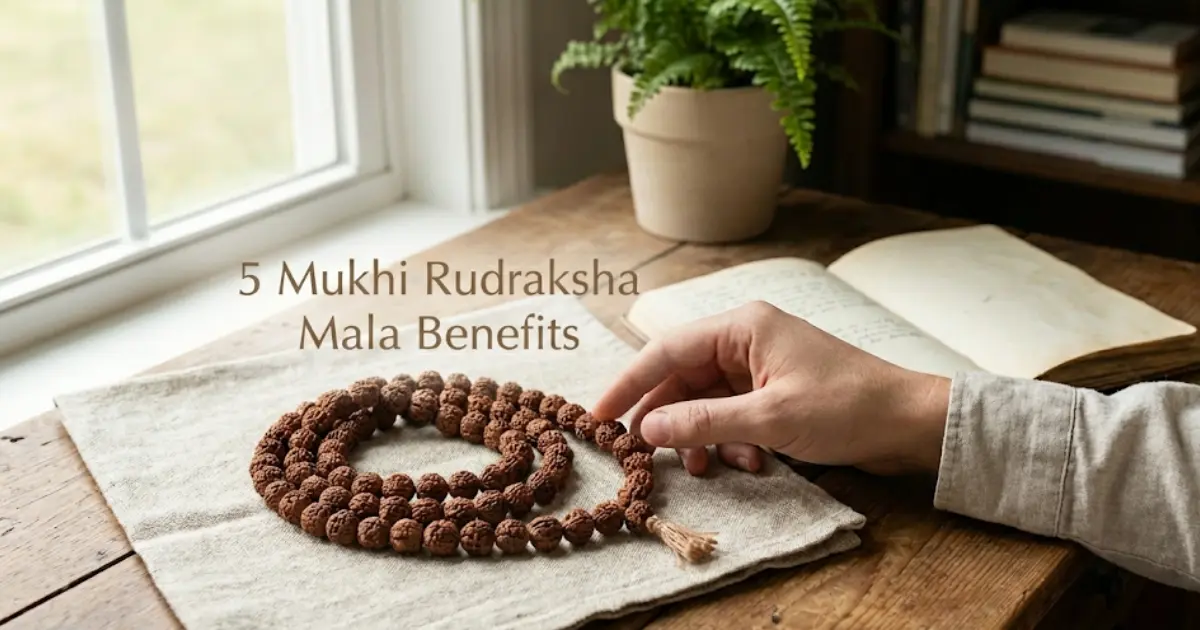
5 mukhi rudraksha mala has quietly found its way into the lives of people who are not chasing trends but seeking something steady, meaningful, and grounded. Many first encounter it at a time when life feels mentally crowded or emotionally demanding, and they are looking for a simple anchor they can actually live with, not just admire.
What often begins as curiosity slowly turns into daily familiarity, because the experience of wearing it feels personal rather than symbolic.
Over the years of working closely with and selling 5 mukhi rudraksha mala to customers from different backgrounds, one pattern has become very clear. People are rarely drawn to it because of exaggerated promises. They are drawn because it feels approachable, balanced, and practical.
Students ask about it for focus, working professionals look to it for mental calm, and spiritually inclined wearers appreciate that it does not demand rigid rituals to be meaningful. This understanding does not come from theory alone, but from real conversations, repeat buyers, and long-term feedback that only hands-on experience can provide.
What makes the 5 mukhi rudraksha mala stand out is not just its long presence in tradition, but how naturally it fits into modern life. It carries cultural depth, yet it works as a simple tool for awareness, discipline, and emotional steadiness.
Having handled authentic beads, explained quality differences, and guided people through realistic expectations, it becomes clear that its impact is gradual, honest, and deeply individual. There is no instant transformation, but there is a consistent sense of grounding when it is used with intention.
This guide is written for anyone considering a 5 Mukhi Rudraksha mala and wanting clear, trustworthy information rather than myths or marketing claims. It draws from real-world experience, traditional context, and practical understanding to explain why so many wearers feel drawn to it, what it can realistically support, and how to approach it with clarity and confidence.

The 5 mukhi rudraksha mala has a clear cultural identity and a long history, which is why many choose it first. Historically, these beads are linked to Shiva traditions and the Panchamukhi symbolism found in classical Hindu texts that associate five faces with balanced energies.
For modern wearers, the bead is useful because it is described as supportive for attention, learning, and balanced temperament. When someone decides to try a 5 mukhi rudraksha mala, they are often responding to both cultural meaning and a simple practical goal, such as improving calm or concentration.
A 5 mukhi rudraksha mala is a string of beads where each bead has five vertical lines or clefts called mukhis. The bead comes from a tree species native to parts of South Asia and the Himalayas and has been used in spiritual practice for centuries.
For many people, the object matters because it acts as a tangible reminder to pause, breathe, and focus. The physical presence of a 5 mukhi rudraksha mala can anchor short practices, which is why it often becomes part of a daily routine for those seeking steady attention and purpose.
Across traditional sources, the 5 mukhi bead is described as associated with complex symbolic ideas such as the five elements and the five forms of Shiva. Texts and oral traditions promote their use for discipline and spiritual progress, which explains why it appears in ritual and meditation contexts.
Over centuries, this background shaped how communities interpret the bead, and it remains a widely recognized choice for people beginning or deepening steady practice. Keep in mind that cultural endorsement explains adoption, not proof of specific physiological outcomes.
People who most commonly report benefit from a 5 mukhi rudraksha mala are those who want to reduce scattered thinking, improve study or work focus, or add structure to meditation.
Examples include students using the bead as a concentration cue, professionals using it as a calming tactile anchor during stress, and meditators who use it to count repetitions while staying present.
Practical benefit is often incremental and supported by habit building, rather than instant or miraculous change. Personal context and consistent use strongly affect outcomes.

A 5 mukhi rudraksha mala helps calm the mind primarily by offering a stable object for mindful practice and by encouraging simple habits. Wearing the mala or using it during short sessions provides a physical cue that signals the brain to shift attention.
This is useful during busy days when deliberate pauses are needed. Many users find that pairing the bead with a short breathing pattern or a few counted repetitions helps reduce reactivity. The calming influence tends to come from practice and habit supported by the mala rather than the bead alone.
Three practical mechanisms explain why the 5 mukhi rudraksha mala often reduces mental noise. First, attention is redirected by a tactile cue when fingers move across beads. Second, ritualized use, such as a short pre-work or pre-study routine, conditions the mind to slow down.
Third, repeated practice builds a habit that lowers baseline reactivity over time. These mechanisms are consistent with general behavior science on habit formation and cue-response patterns, and they help account for the mala’s daily usefulness.
Small practices make a measurable difference. For example, a short practice of 3 to 9 fingertip counts on the 5 mukhi rudraksha mala before starting stressful tasks can create a predictable calm window.
Another useful practice is a two-minute breath count while touching three consecutive beads when feeling tension. These routines are quick to learn and easy to repeat, and they often produce noticeable calm without elaborate ritual. Practical consistency is the key factor in outcomes.
Real-life signals that calm is improving include fewer impulsive reactions, clearer choices under pressure, easier sleep onset, and less rumination. Users also report improved capacity to return attention to work after interruptions.
Track small, measurable indicators such as the number of times you need to check a message during focused work or the minutes to fall asleep, the mala is valuable insofar as it becomes part of a routine that reliably shifts these metrics.

A 5 mukhi rudraksha mala can contribute to emotional stability through regularized practice and reflective pauses. When used as a consistent tool, it reduces the tendency to escalate emotional responses because it creates an opportunity to interrupt reactive patterns.
Over weeks of steady use many people report improved tolerance for frustration and fewer mood swings, which is essentially emotional balance reinforced by habit and awareness.
Steady emotions support clearer decisions by lowering impulsivity and enhancing perspective. Using a 5 mukhi rudraksha mala as a micro-practice before important decisions helps create a short buffer between stimulus and response.
That buffer often leads to choices that reflect values and long-term thinking rather than immediate reactivity. This effect can be particularly helpful in high-stakes or emotionally charged contexts.
When emotions spike, practical steps include stopping for three mindful fingertip passes on the mala, observing the bodily sensation without judgment, and taking three slow breaths.
These short steps leverage the physicality of the 5 mukhi rudraksha mala to bring attention from the emotion to a regulated pattern. Repeating this simple routine creates a new default response to stress that promotes steadiness over time.
Signs of increased emotional resilience include quicker recovery after setbacks, less emotional exhaustion at the end of the day, and more consistent responses in challenging conversations.
Over weeks of consistent use of the 5 mukhi rudraksha mala with short practices, wearers often notice slower escalation of stress and a stronger sense of inner steadiness.
Wearing a 5 mukhi rudraksha mala supports focus and clarity primarily by serving as an external reminder and cue for attention. The bead becomes part of a behavioral ecosystem that helps the brain shift into a focused mode.
People who pair the mala with short pre-task rituals report faster task start-up and fewer distractions during work. The improvement in concentration usually reflects better routine and cueing rather than a guaranteed direct cognitive enhancement from the bead itself.
A physical cue like the tactile feel of the 5 mukhi rudraksha mala can be more effective than a mental promise to focus, because the hand-to-bead motion triggers a sensorimotor loop. That loop rapidly redirects attention away from internal chatter and toward the task at hand. For many, this small shift is what leads to a perceptible gain in clarity and productive attention.
Simple routines include a one-minute bead ritual before starting deep work and a three-bead reset after any interruption. Another effective routine is to use the mala as a timer marker: touch thirty beads slowly during a focused session and then reward yourself with a short break.
These routines help structure attention cycles and reduce decision friction about when to begin or resume focused tasks.
Combining the 5 mukhi rudraksha mala with breath work enhances both calm and clarity. A practical combined routine is two minutes of paced breathing while moving fingers across beads in sync.
This pairing uses both interoceptive regulation and tactile cueing to prime concentration, making it particularly effective before demanding cognitive work or public speaking.

Many wearers describe the 5 mukhi rudraksha mala as giving a subtle sense of protection that bolsters confidence. This effect is primarily psychological and social: wearing the mala signals intention to oneself and others, and that signal can strengthen one’s internal posture. The bead acts as a reminder of values and prepares the wearer for interactions with a more grounded presence.
Objects like the 5 mukhi rudraksha mala function as external anchors for identity and purpose. They help reduce uncertainty by providing a fixed point of reference in situations that might otherwise feel unstable. This anchoring reduces anxiety and makes the wearer more able to behave confidently because they feel more anchored to their intentions.
Users often notice the benefit in situations such as interviews, difficult conversations, and public presentations. The 5 mukhi rudraksha mala is used subtly as a touch cue to recover composure. These modest recoveries of calm compound over time, producing a louder overall shift in how the wearer carries themselves across daily life.
Healthy use means leaning on the mala as a support rather than a crutch. Build inner assurance by combining bead practices with skill-building actions such as rehearsal, preparation, and small exposure to feared situations. Over time the mala is less relied upon and more integrated into a personal toolkit for confident behavior.
Quality and authenticity matter because the mala’s durability and tactile feel affect regular use. A genuine 5 mukhi rudraksha mala usually has a natural rough surface, clear mukhi lines, and a feel that differs from artificially carved or glued beads.
Buyers should prioritize beads from trusted sources and inspect for natural grooves, consistent texture, and proper hole-drilling techniques so that the mala lasts with minimal maintenance.
To identify genuine beads, examine surface texture, check for natural mukhi lines, avoid beads with identical repeating patterns that suggest casting, and test for solid weight and natural feel. Avoid beads that are too smooth, painted, or that have obvious machine-made uniformity.
Reputable sellers will also provide origin information because beads from Nepal are often valued for their larger size and deeper grooves.
Care for a 5 Mukhi Rudraksha mala with gentle cleaning using lukewarm water and mild soap if needed. Traditional conditioning practices include brief ghee or milk immersion followed by gentle drying, which some practitioners use to preserve surface integrity.
Avoid prolonged soaking in harsh cleaners, and keep the mala away from perfumes and strong chemicals. Regular light oiling with vegetable oil can help prevent cracking when climates are dry. These steps help maintain both appearance and usability.
Restring a 5 mukhi rudraksha mala when the thread shows wear or when beads begin to rub excessively against each other. Replace beads that crack or split. Consider upgrading to higher-quality or larger beads if you want better tactile feedback or longer wearing comfort. Proper maintenance extends the life of a mala and preserves the practical benefits derived from regular use.
| Benefit category | Commonly reported effects | Practical evidence or notes |
| Mental | Improved focus, reduced distraction | Behavioral cueing and habit formation explain effects |
| Emotional | Greater steadiness, reduced reactivity | Consistent short practices support resilience |
| Physical | Better sleep onset, reduced tension | Evidence is limited and mostly anecdotal; small studies suggest stress markers may decrease. |
| Spiritual | Stronger ritual practice, disciplined meditation | Cultural usage and long tradition support this role |
| Care tip | Regular gentle cleaning and oiling | Preserves bead integrity and tactile feel. |
Who should consider wearing this kind of mala?
Anyone wanting structured habit signals for calm and focus may consider a 5 mukhi rudraksha mala. It is a reasonable choice for beginners and experienced practitioners who want a simple, durable bead to anchor short daily rituals. People with strong allergic reactions to plant oils should check materials and finishes before long-term wear.
How long before I notice any effect?
Most people report small changes after one to four weeks when using the 5 Mukhi Rudraksha Mala for short daily practices. Larger or more sustained shifts in mood and focus usually take several weeks to months because the change depends on habit formation and context.
Can I wear it every day and during work?
Yes, many people wear a 5 mukhi rudraksha mala daily, including during work. The bead is designed to be unobtrusive and to act as a continuous reminder for calm and purpose. If you work in a setting where bead jewelry is not appropriate, use it for short practices before and after shifts.
Is there any special ritual needed to start wearing it?
No strict ritual is required. A simple, respectful practice of setting an intention and starting with short morning or evening uses is sufficient. Some traditional practitioners perform conditioning rituals such as brief ghee or milk immersion before first use, but this is optional and cultural.
How should beginners set realistic expectations?
Begin with short, repeatable practices and treat the 5 mukhi rudraksha mala as a tool for habit change. Expect small but meaningful effects over weeks. Avoid expecting immediate, dramatic transformations. Track simple signals like sleep onset time or number of distraction checks to see progress.
Can it be combined with other spiritual or wellness practices?
Yes, combining the mala with breath work, mindful walking, or structured journaling enhances results. The bead functions as a cue that integrates well with other short practices and can amplify their consistency.
How do I care for it while travelling or during exercise?
Store the 5 mukhi rudraksha mala in a soft pouch and avoid heavy sweat exposure. For exercise, either remove the mala or wear it in a way that prevents tugging and sweat saturation. Wipe lightly with a dry cloth after travel and re-oil occasionally in dry climates.
As this exploration comes to a close, it becomes clear that the 5 mukhi rudraksha mala is not something people connect with because of dramatic claims or instant results. Its value lies in how quietly it fits into real life.
Whether worn during work, used in short moments of reflection, or held during times of emotional strain, it often becomes a steady companion rather than a symbol meant to impress. The attraction many wearers feel grows from lived experience, not expectation.
From years of working directly with authentic beads and listening to how people actually use them, one truth stands out. The 5 mukhi rudraksha mala works best when approached with clarity, patience, and a realistic understanding. Its influence is shaped by consistency, intention, and personal context.
Some notice improved focus, others feel calmer responses to stress, and many simply appreciate the sense of balance it brings to their daily rhythm. These outcomes are subtle, but they are also sustainable.
What ultimately gives the 5 mukhi rudraksha mala its lasting relevance is trust. Trust built through tradition, through careful sourcing, and through honest conversations about what it can and cannot do. When worn with awareness rather than blind belief, it becomes a practical tool that supports inner discipline and emotional steadiness.
For those who choose it thoughtfully, the 5 mukhi rudraksha mala often leaves a powerful impact not by changing life overnight, but by quietly improving how each day is experienced.