Physical Address
2958, Second Floor,
Arya Pura, Roshan Ara Road,
Delhi – 110007, India
Email Address
ceo@dimrajtraders.com
dimrajtraders24@gmail.com
Phone Numbers
+91 98998 59299
+91 95609 80298
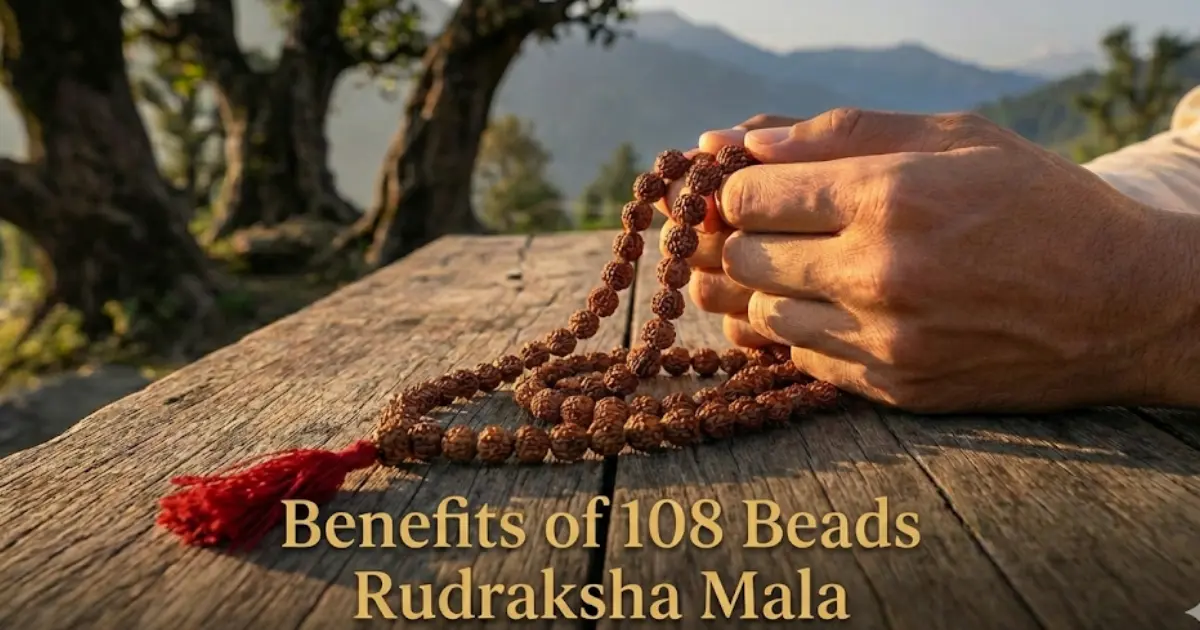
108 beads rudraksha mala is more than a string of sacred seeds. For many people, it becomes a quiet companion during moments of prayer, reflection, and inner searching. I have seen firsthand how people approach a rudraksha mala not just as a spiritual object, but as something deeply personal.
Some come to it during stressful phases of life, others during periods of spiritual curiosity, and many after years of practice when they want something authentic and rooted in tradition.
Working closely with these traditional spiritual products has given me long-term exposure to how they are actually used, cared for, and understood by real practitioners.
The significance of the number 108, the way the beads are counted during chanting, and the preference for specific rudraksha types are not abstract ideas for me.
They come from repeated conversations with devotees, meditators, and spiritual teachers who rely on a 108 beads rudraksha mala as part of their disciplined practice.
This experience shapes how I look at the subject, not from theory alone, but from practical use, cultural context, and lived tradition that has been passed down for generations.
This article is written to help you clearly understand both the spiritual meaning and the practical value behind using a 108 beads rudraksha mala.
Every explanation here is grounded in widely accepted spiritual traditions, supported by research where available, and framed with honesty where beliefs and evidence intersect.
Whether you are exploring rudraksha for the first time or seeking deeper clarity about its role in chanting and meditation, this guide aims to offer trustworthy, experience-backed insights that respect both faith and facts.
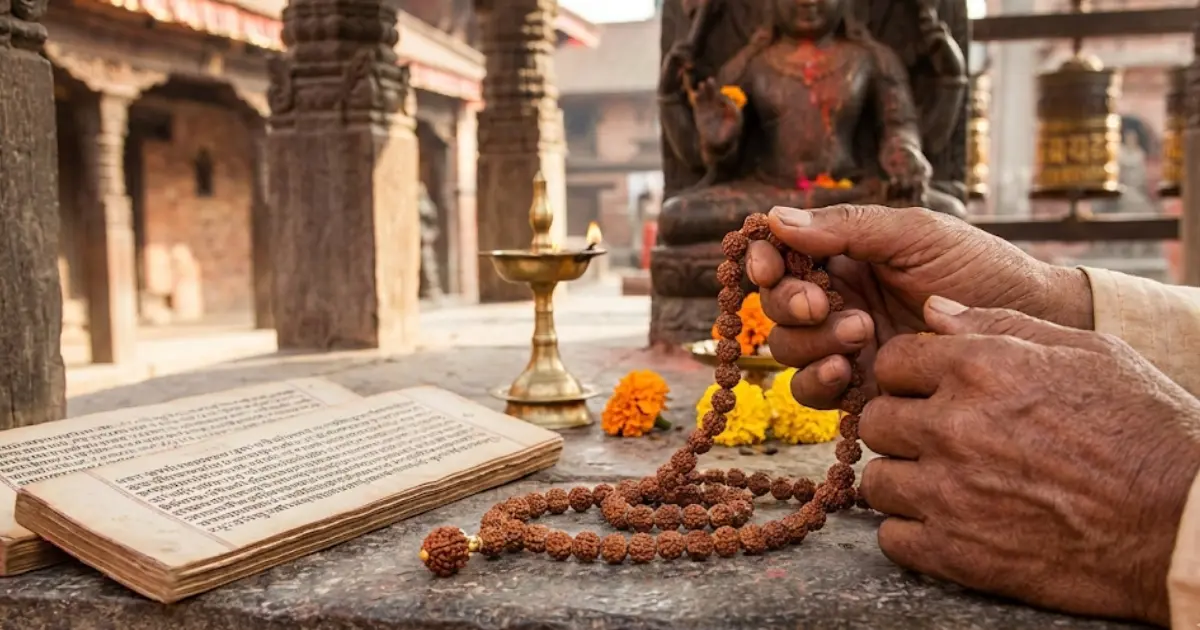
The sacred symbolism of the 108 beads rudraksha mala reaches across Hindu, Buddhist, and yogic lineages, where the number 108 is treated as a marker of spiritual completion and wholeness.
Spiritual teachers, traditional texts, and modern practitioners often point to multiple layers of meaning behind the number 108, from Vedic counts and cosmological symbolism to practical guidance for daily practice.
When a practitioner holds a 108 beads rudraksha mala, they are using an object shaped by centuries of cultural intelligence and ritual intent that helps translate abstract teachings into lived habits.
Many explanations for why 108 is considered complete are echoed by teachers and scholars: there are ancient lists and counts that total 108, subtle anatomy readings that point to significant energy points numbering 108, and cosmological relationships that were meaningful to early observers.
Putting the practice into daily life, repeating a mantra 108 times gives a practitioner a single, comprehensible block of practice that often fits into a busy schedule.
Using a 108 beads rudraksha mala in this context makes the abstract idea of completion practical and repeatable, which is why the number persists in ritual use.
A rudraksha mala made with 108 beads combines the ritual significance of the bead type with the formal utility of the count. Rudraksha beads are traditionally linked to Lord Shiva and hold cultural meaning across many devotional communities.
A 108 beads rudraksha mala, therefore, becomes a bridge between symbolic meaning and a daily practice habit. This coupling of count and material gives the practitioner both a structure for repetition and a culturally resonant object that supports devotion, attention, and continuity of practice.
Mantra repetition and the use of prayer beads are practical tools for training attention. When you chant with a 108 beads rudraksha mala, you are creating rhythmic sound and breath patterns that interact with attention circuits in the brain.
This structured repetition supports phases of settling, deepening, and return that many meditators describe as a natural arc of a practice session. The mala’s tactile feedback reduces mental distraction, allowing the mantra to become the central object of awareness rather than the counting itself.
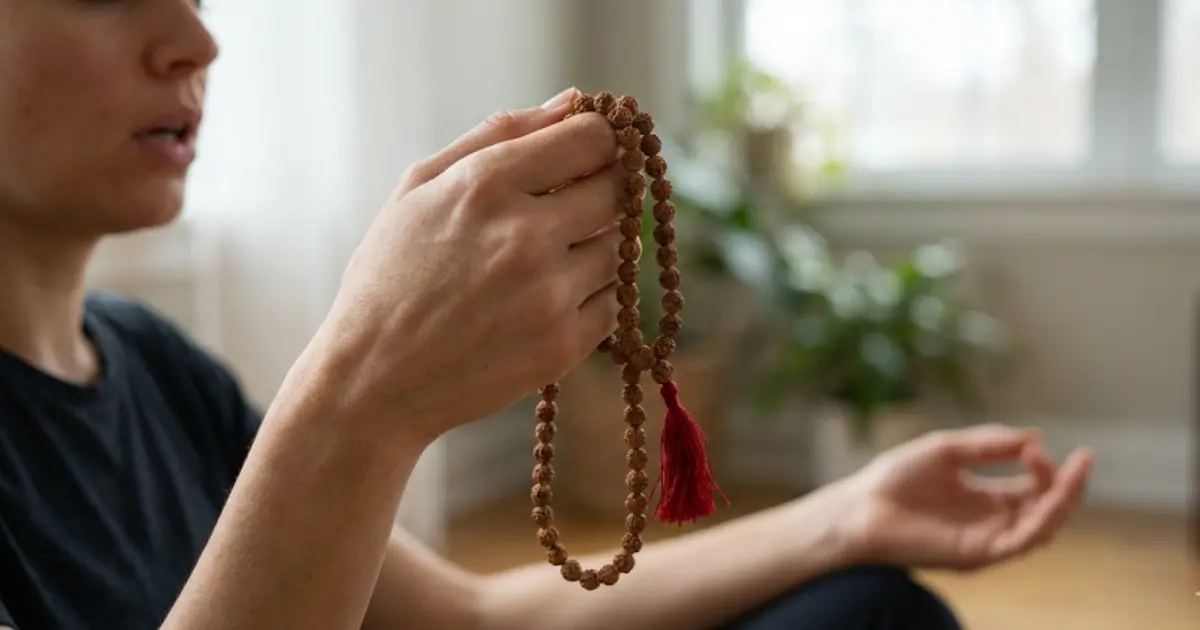
A 108 beads rudraksha mala is a practical aid for disciplined chanting. It externalizes counting, provides tactile rhythm, and cues the nervous system toward steadiness.
For people who chant for devotion or concentration, the combination of breath, sound, and bead-to-finger movement reduces cognitive overhead and keeps the mind directed toward the practice rather than toward secondary tasks like counting or timing.
Counting with a 108 beads rudraksha mala removes the need to keep numbers mentally and allows the practitioner to focus on the mantra itself. The act of moving one bead per repetition creates repetitive micro-transitions that serve as anchors.
Each movement is a small reorientation that reduces drift and returns attention to the present. Over many cycles, these micro-reorientations add up to a measurable improvement in sustained attention for many practitioners.
Using a 108 beads rudraksha mala for chanting creates a predictable sensory pattern. Predictable sensory patterns help the brain shift out of reactive modes and into a calmer, clearer state.
Many people who adopt a regular chanting practice with a 108 beads rudraksha mala report clearer thinking after sessions and an improved ability to return to focused work or contemplation afterward.
This subjective clarity is reinforced by research showing physiological benefits tied to mantra and related meditative practices.
Each 108-count cycle can be understood as a unit of practice that trains both habit and heart. When you use a 108 beads rudraksha mala repeatedly, you are cultivating a rhythm of attention and devotion that becomes easier to access over time.
Practitioners describe this as a deepening cadence, sessions feel more unified and less fragmented, and that sustained cadence can support longer-term shifts in perspective and emotional tone.
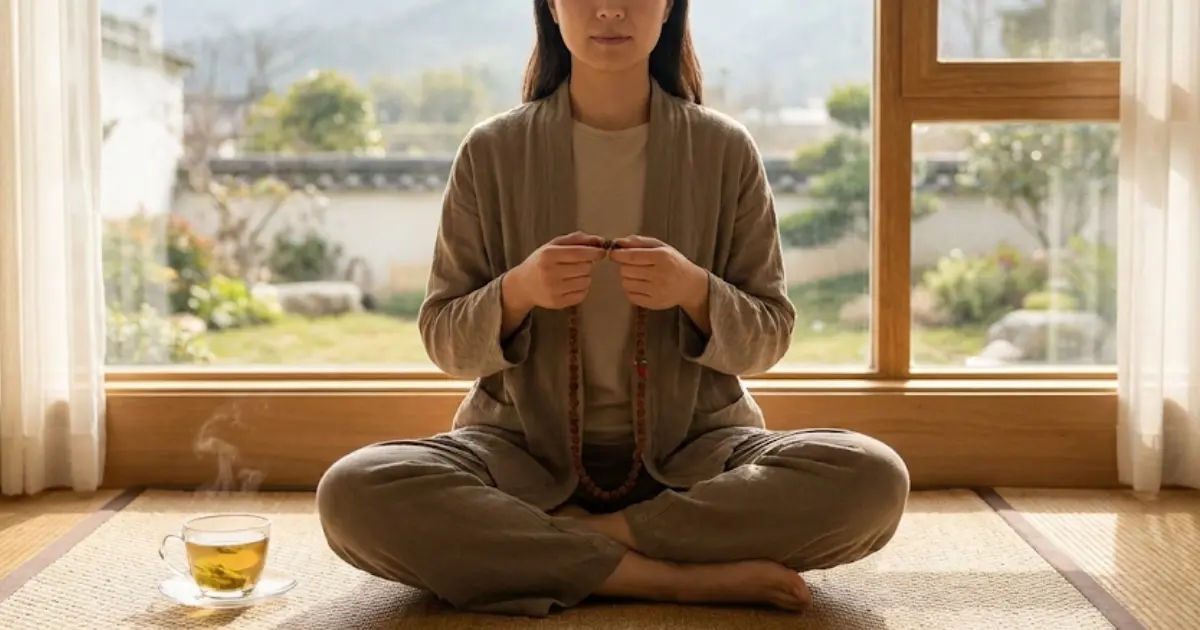
Rudraksha beads are valued for their devotional meaning and for the calming routines they enable. Whether worn or used as a japa tool, a rudraksha mala helps many people regulate agitation through ritual and repeated sensory engagement. The calming effect is both practical and, for many communities, spiritually meaningful.
Some laboratory studies have explored the mineralogical and bioelectrical properties of rudraksha beads. These studies suggest there may be measurable electrical and dielectric characteristics of the seed material, though findings are preliminary and require careful interpretation.
Practitioners noting the calming effect of a 108 beads rudraksha mala combine these material observations with the well-documented calming effects of rhythmic sound and focused attention.
When framed this way, the bead’s material qualities are a supporting context rather than definitive proof of a specific clinical action.
A simple truth of contemplative practice is that regular, short, daily sessions tend to reduce baseline reactivity. Using a 108 beads rudraksha mala daily asks for small commitments that build into a reliable rhythm.
That rhythm then helps modulate emotional responses by giving attention a steady home. In practical language, daily mala practice can reduce impulsive reactivity and allow more measured responses under stress.
Controlled studies of mantra and related meditative techniques show consistent associations with lower heart rate and improved markers of autonomic regulation in many participants.
While not every study uses rudraksha specifically, the evidence for mantra practice more generally supports the idea that a 108 beads rudraksha mala used for japa can be part of a stress reduction routine that produces measurable physiological shifts.
Use this evidence as a reasoned support for the practice rather than a guarantee of outcomes for any single person.
The steady practice encouraged by a 108 beads rudraksha mala cultivates small daily changes that accumulate over months and years. These changes are the substrate of growth for many practitioners: improved clarity, increased patience, and a more stable inner life.
A repeating mantra and the tactile movement of a 108 beads rudraksha mala give the mind a single, repeatable cue to return to the present. Each repetition is a tiny exercise in letting go and coming back.
Over time, these micro-practices form neural habits that support mindfulness in broader daily life, not just during formal sessions.
A mala creates ritual boundaries, start, practice, and finish, that signal to the brain when to enter and exit contemplative mode.
Using a 108 beads rudraksha mala helps accelerate the nervous system’s shift into calmer patterns through repeated sensory-motor cycles and consistent breath-sound coordination. For many practitioners, this results in a faster onset of deeper mental states during meditation.
Practically speaking, the presence of a 108 beads rudraksha mala on a bedside table or altar functions as a prompt to practice. Those visual and tactile prompts make habit formation easier.
Over weeks and months, this consistent practice supports a stable inner orientation and a practical discipline that carries forward into daily decisions and priorities.
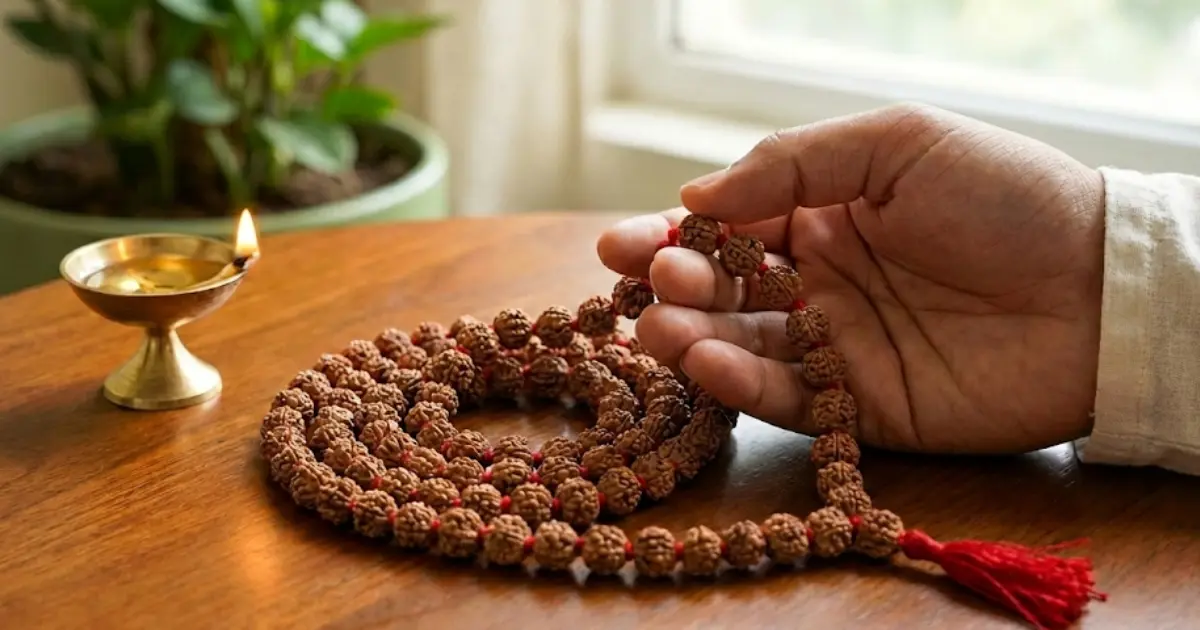
Panchmukhi or five-faced rudraksha is commonly recommended for general spiritual use because it is associated with balance, protection, and steadying energies in traditional accounts.
Many practitioners prefer a panchmukhi configuration in their 108 bead string for its approachable symbolism and its wide acceptance across lineages.
Traditional sources describe the five faces rudraksha as symbolic aspects linked to protective and harmonizing qualities. These associations are deeply embedded in devotional practice and remain the reason many people select a panchmukhi bead for a 108 beads rudraksha mala intended for daily use.
The bead’s long cultural history is the primary source of its reputation rather than modern clinical validation.
Combining a panchmukhi bead with the 108 count forms a practical, balanced configuration that meets the needs of many beginners and experienced practitioners alike.
That combination is commonly taught by teachers and offered by reputable malasellers because it aligns tradition with usability: a single, simple tool that supports daily chanting and devotional practice.
When devotees report feeling steadier or more grounded while using a panchmukhi 108 beads rudraksha mala, those effects likely reflect the combined influence of ritual, expectation, and sustained contemplative practice.
The interaction of these factors produces real subjective benefits for many users. Clinical inquiry into material-specific effects is emerging but not yet definitive.
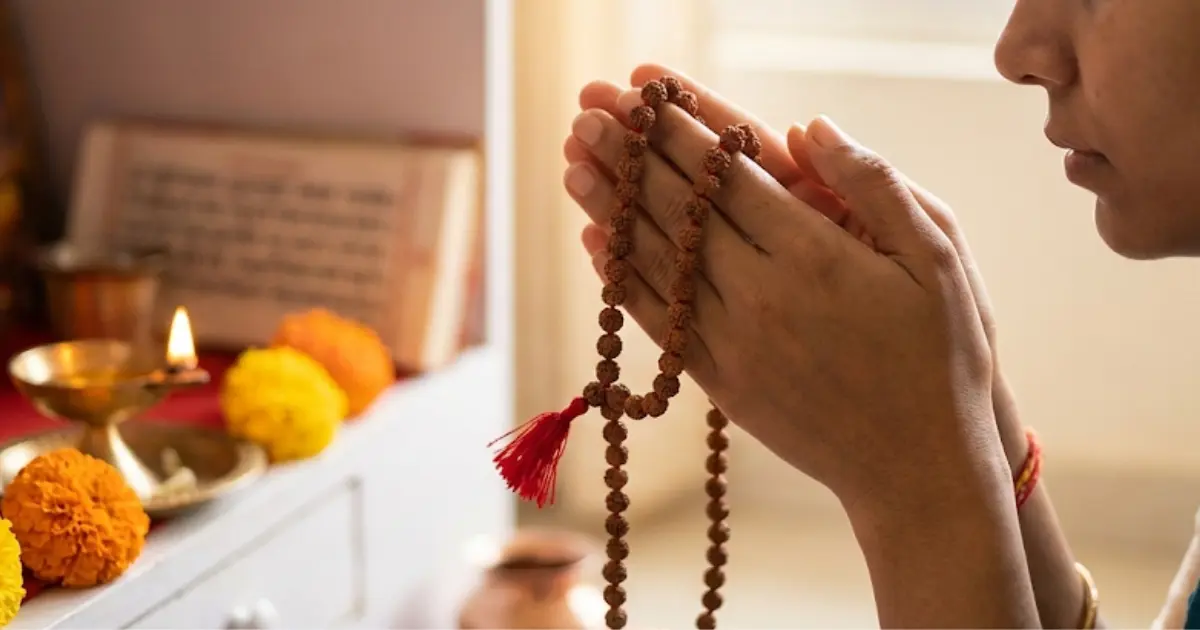
When devotion is the aim, a 108 beads rudraksha mala functions as a devotional instrument that supports focus, feeling, and continuity. Japa practice supported by a mala produces both immediate felt benefits and long-term shifts in orientation toward the sacred.
In devotional practice, repeating a name or phrase while moving beads links the sensory, emotional, and cognitive systems. A 108 beads rudraksha mala amplifies this link because the repeated cycles create familiar, comforting rhythms.
These rhythms build an emotional bond between the practitioner and the devotional aim, which often deepens over time.
A mala reduces the mental friction of remembering counts or checking time. Instead, the tactile cycle keeps attention returning to the devotional object. When used mindfully, a 108 beads rudraksha mala prevents scattered practice and supports long stretches of undistracted chanting or silent repetition.
Repetition is training for the emotions as much as for attention. A 108 beads rudraksha mala makes repetition accessible and dignified. The resulting steady practice reinforces a sense of identity as a practitioner and supports deeper alignment between daily life and spiritual aims.
Sustained engagement with a 108 beads rudraksha mala produces cumulative changes. Rather than a dramatic overnight transformation, most long-term benefits are subtle, incremental, and depend on a steady practice habit.
Regular use of a 108 beads rudraksha mala trains patience through small daily acts. This slow accretion of practice builds character and inner stability and makes reactive responses less automatic. The cumulative effect is a more resilient baseline for facing life’s challenges.
Over months and years, consistent mala practice can lead to reorganized cognitive patterns, increased clarity, and a calmer default state.
These are common reports among long-term practitioners who use a 108 beads rudraksha mala as an anchor for daily practice. The changes correlate with broader findings about contemplative practice and cognitive-emotional regulation.
Beyond immediate calm and focus, regular use of a 108 beads rudraksha mala often yields increased self-awareness and practical improvements in attention and stress response.
These outcomes are best understood as the result of steady habit and intention rather than as a claim that the beads alone produce change.
What is the significance of using exactly 108 beads?
The number 108 carries symbolic and practical significance across traditions. Using a 108 beads rudraksha mala gives a full cycle for chanting that is culturally meaningful and practically useful in daily practice. This common configuration has persisted because it balances manageability with sufficiency for meaningful repetition.
Can beginners use a rudraksha mala for chanting?
Absolutely. A 108 beads rudraksha mala is especially useful for beginners because it removes the need to count mentally and provides a clear, repeatable practice format. Starting with brief daily sessions and a consistent routine is the recommended approach.
Is there a correct way to use a rudraksha mala?
Common practical guidelines are widely taught: sit comfortably, hold the mala in the right hand, move one bead per repetition with the thumb and middle finger, and avoid crossing the guru bead. These norms help maintain respect for the tool while maximizing its usefulness in practice.
Can a rudraksha mala be worn and used together?
Yes. Many practitioners both wear and use their mala during practice. Wearing can keep intention present during the day, while deliberate use during japa preserves the tool’s ritual quality. Treat the mala respectfully when not in use to maintain its symbolic function.
How long does it take to experience spiritual benefits?
Short-term benefits like calm and clearer focus can be experienced within a few sessions, but bigger changes in habit and worldview typically require consistent practice over weeks or months. Individual results vary.
Is the panchmukhi rudraksha suitable for everyone?
Panchmukhi rudraksha is often suitable as a general-purpose bead and is widely used for daily malas. The choice of bead depends on personal resonance, guidance from teachers, and intended spiritual aims. There are no universal restrictions, though cultural and lineage-based guidance can be helpful.
Can mantras be used for meditation without mantras?
Yes. Malas can anchor silent breath awareness, visualizations, or mindful counting. Even without a vocalized mantra, a 108 beads rudraksha mala provides the sensory structure that supports focused practice.
Does the material of the thread matter?
Choose a thread that is durable and comfortable. Natural fibers are common, and many practitioners select thread material that aligns with their values and ritual preferences. The thread’s primary function is practical: to keep the beads secure and non-distracting during practice.
How should a rudraksha mala be stored respectfully?
Store the mala in a clean, dry place, ideally wrapped or kept on an altar. Many people keep it in a small bag or a cloth when not in use. Respectful storage helps maintain the devotional quality of the object and reminds the practitioner to treat the tool with care.
Can daily chanting improve focus and peace?
Yes. Daily chanting supported by a 108 beads rudraksha mala strengthens attention habits and reduces baseline reactivity for many practitioners. The combination of rhythm, tactile anchoring, and consistent intention produces reliable improvements in focus and emotional balance.
In the end, the true value of a 108 beads rudraksha mala lies not in symbolism alone, but in how consistently and sincerely it is used. Across traditions, cultures, and generations, this simple spiritual tool has remained relevant because it supports something deeply human: the need for focus, calm, and inner stability.
From years of working closely with authentic rudraksha products and listening to the experiences of practitioners, one truth stands out clearly. A 108 beads rudraksha mala does not promise instant transformation, nor does it replace personal effort or discipline. Its strength lies in supporting regular practice.
Ultimately, choosing and using a 108 beads rudraksha mala is a personal journey rooted in faith, habit, and self-awareness. When approached with respect, realistic expectations, and consistency, it becomes more than a sacred object.
It becomes a steady companion in spiritual growth, offering structure to practice and grounding to daily life. This enduring relevance is what gives the rudraksha mala its lasting spiritual value.